
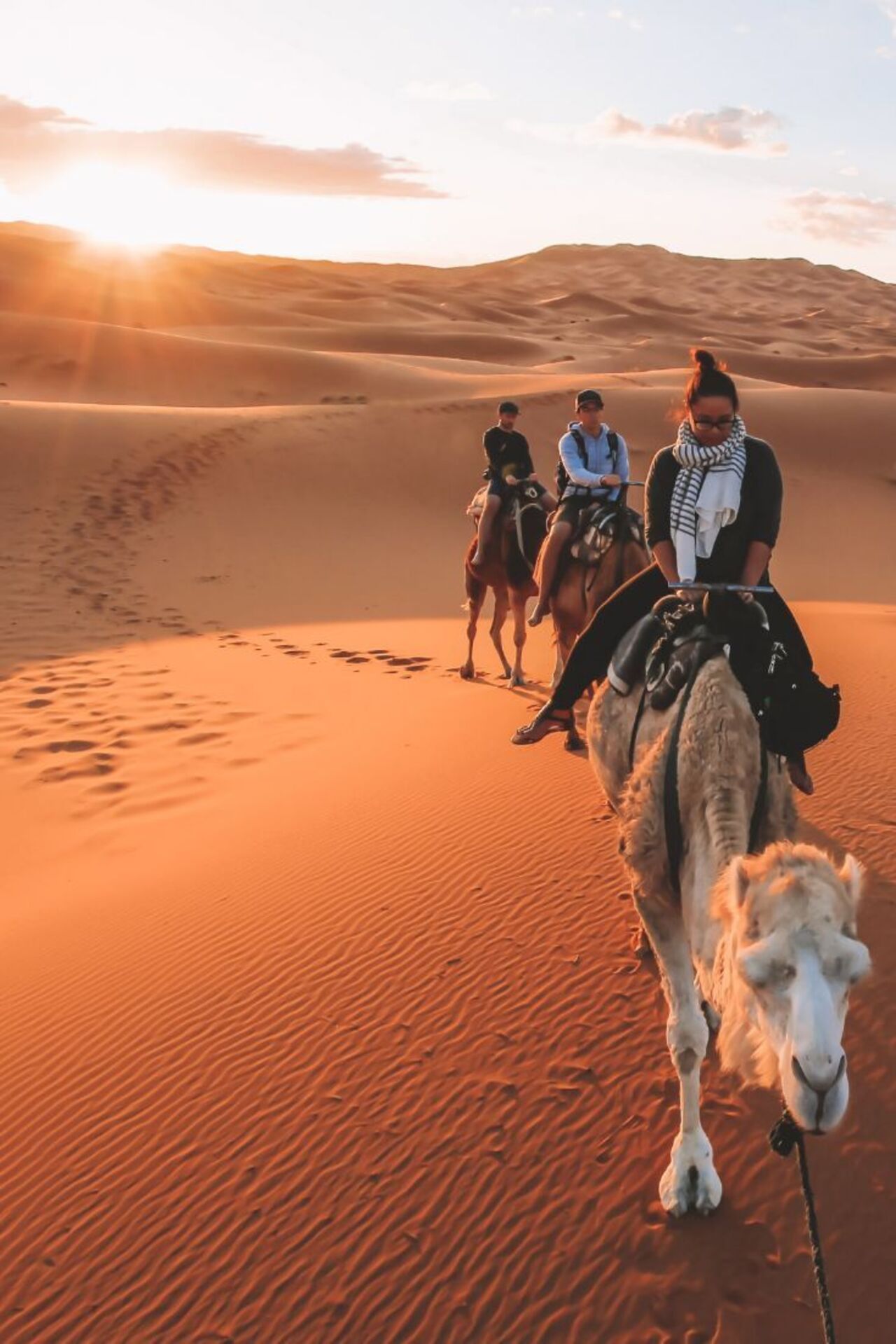
Planning a trip to the Moroccan Sahara and wondering what to pack? You’re not alone. What to wear in the Sahara desert Morocco is one of the most common questions we get from travelers before they book a desert tour from Marrakech.
The desert is a place of extremes blazing heat by day, cold nights, blowing sand, and camel rides that call for the right outfit. Get it wrong, and you’ll be uncomfortable. Get it right, and you’ll focus on the magic.
This guide covers exactly what to wear, season by season, for every part of your desert experience from the car ride to the dunes.
Why Clothing Matters More Than You Think in the Sahara
The Sahara in Morocco is not just hot. It’s a landscape of contrasts. Temperatures in Merzouga and Zagora can swing from 35°C (95°F) at midday to 8°C (46°F) after sunset. Add wind-blown sand, strong UV rays, and a camel saddle, and your clothing choices directly affect your comfort and enjoyment.
Dressing right also means respecting local culture. Morocco is a Muslim majority country, and modest dress is appreciated The Golden Rules for Sahara Desert Clothing
Before getting into specific items, keep these principles in mind:
Layer up. The desert temperature changes dramatically. Wear clothes you can add and remove easily.
Cover your skin. Loose, long-sleeved clothing protects against the sun and sand better than shorts and tank tops even in summer.
Choose natural fabrics. Cotton and linen breathe well and feel cooler than synthetics in the heat.
Keep it modest. Shoulders and knees covered is the general standard, especially when visiting villages or interacting with local guides and families.
Pack light but smart. You’ll likely be in a 4×4 or on a camel bulky luggage is inconvenient.
What to Wear in the Sahara Desert Morocco: By Season
Summer (June–August): Extreme Heat
Summer in the Sahara is intense. Daytime temperatures regularly exceed 40°C (104°F) in Merzouga. Here’s what works:
- Loose linen or cotton trousers (light beige or white reflects heat)
- Long-sleeved lightweight shirts paradoxically, these keep you cooler than bare arms by blocking direct sun
- A wide-brim hat or cap the desert sun is unforgiving
- Sunglasses with UV protection essential
- Breathable closed-toe sandals or light sneakers
- A light scarf or shemagh protects your neck, face, and head from sand and sun. Your guide may offer a traditional Tuareg turban wrap, and we highly recommend accepting it
- One light fleece or hoodie even in summer, evenings at camp can be surprisingly cool
Winter (November–February): Cold Nights, Mild Days
Winter is actually one of the most popular times to visit the Sahara. Days are warm and sunny (20–25°C), but nights can drop to near freezing, especially in December and January.
- Warm base layer (thermal top or merino wool)
- Mid-layer fleece or jumper
- A proper jacket or windproof outer layer this is non-negotiable for overnight stays
- Long trousers jeans work, but quick-dry hiking pants are more versatile
- Warm socks especially if you’re sleeping in a camp tent or traditional khaima
- Beanie or hat for evenings
- The same wide-brim hat for daytime
Spring and Autumn (March–May, September–October): The Sweet Spot
These months offer the most balanced weather warm days (25–32°C) and cool but not cold nights. This is the easiest season to dress for:
- Light cotton trousers or chinos
- T-shirt plus a long-sleeved layer for evenings
- Light jacket or zip-up fleece
- Comfortable walking shoes or sneakers
- Sun hat and sunglasses
What to Wear for a Camel Trek
Camel trekking is one of the highlights of any Morocco desert tour from Marrakech, but sitting on a camel for 1–2 hours requires some thought:
- Wear trousers, not shorts. The saddle will chafe bare legs trust us.
- Avoid loose flowy skirts or dresses that can get caught or blow in the wind.
- Closed-toe shoes are safer than sandals when mounting and dismounting.
- Bring a scarf to wrap around your face the dunes can be windy and sandy.
- A small backpack or bum bag is ideal for the ride, keeping your hands free.
What to Wear for an Overnight Desert Camp
Sleeping under the stars in a Saharan camp whether a basic desert camp or a luxury glamping setup is unforgettable. Here’s what to bring:
Evening at camp:
- Warm layers it gets cold fast after sunset
- Comfortable trousers and a jumper or fleece
- Socks and light shoes or flip flops for walking around camp
Sleeping:
- Camps typically provide blankets and sometimes sleeping bags, but a light base layer to sleep in adds comfort
- Warm socks
Morning:
- A light jacket for sunrise on the dunes one of the most magical moments of the trip
- Sunglasses and your hat ready to go
What NOT to Wear in the Sahara Desert Morocco
Just as important as knowing what to pack is knowing what to leave at home:
- Shorts they offer no sun or sand protection and can be culturally inappropriate in villages
- Sleeveless tops exposed shoulders are not ideal in conservative rural areas
- Flip flops as your main footwear sand gets everywhere and they offer zero support on the dunes
- Tight jeans uncomfortable in heat and on camelback
- Heavy boots unnecessary and hot (unless trekking the Atlas Mountains beforehand)
- All-white or very light colours for the dune walk sand stains are real
Essential Accessories to Pack
Beyond clothing, a few accessories can make a big difference:
- Sunscreen SPF 50+ reapply every 2 hours in summer
- Lip balm with SPF: the dry desert air is harsh on lips
- Small drawstring bag or daypack: for the dunes
- Plastic bags: to protect your phone and camera from sand
- A headtorch or small flashlight: for navigating camp at night
- Reusable water bottle: hydration is critical in the desert
Can I Buy Clothes in the Desert?
Yes, but with caveats. In Merzouga town and at larger desert camps, you’ll find vendors selling traditional Berber scarves, turbans, and djellabas (the classic Moroccan robe). These make beautiful souvenirs and are genuinely useful on a desert trip.
However, don’t rely on buying clothing there selection is limited, prices for tourists can be high without bargaining experience, and you won’t want to spend time shopping when you could be exploring.
What Women Should Wear in the Sahara Desert Morocco
Women visiting the Moroccan desert should feel comfortable and free to enjoy the experience. A few extra tips:
- Loose trousers and a long-sleeved shirt is the most practical and culturally respectful combination
- A scarf doubles as sun protection, warmth in the evening, and cultural modesty
- A one-piece swimsuit is fine if your luxury camp has a pool bikinis are better kept for the pool area only
- A light dress or skirt is fine at camp in the evening, but wear leggings underneath for practicality
You will not be required to cover your hair, but having a scarf available is both practical and respectful in Berber villages along the route.
What Children Should Wear in the Sahara
Taking the kids on a family desert tour in Morocco? Children need the same protection as adults, with extra attention to:
- Sun hat that stays on: kids move around a lot on camels
- Light long-sleeved sun shirt: (rash guard style works well)
- Comfortable closed-toe shoes: for walking in sand
- Extra warm layer for evenings: kids feel the cold faster
- Their own small backpack to carry a snack and water bottle
Quick Packing Checklist: What to Wear in the Sahara Desert Morocco
Here’s a summary to save or screenshot before your trip:
Clothing:
- 2–3 pairs of light trousers or chinos
- 2–3 lightweight long-sleeved shirts
- 1–2 t-shirts (for layering)
- 1 fleece or warm jumper
- 1 jacket or windproof layer (essential in winter)
- Comfortable socks (including 1 warm pair)
- Underwear (quick-dry if possible)
Footwear:
- Comfortable closed-toe shoes or sneakers
- Light sandals or flip flops for camp
Accessories:
- Wide-brim hat or cap
- Sunglasses (UV protection)
- Large scarf or shemagh
- Sunscreen SPF 50+
- Lip balm with SPF
- Small daypack or drawstring bag
Ready to Experience the Sahara?
Now that you know exactly what to wear, the only thing left is to book your desert adventure. Our licensed local team runs private and shared desert tours from Marrakech to the dunes of Merzouga and Zagora with comfortable transport, expert Berber guides, camel treks, and overnight stays in authentic desert camps.
Contact Us for More Information or to Book Your Tour
Ready to experience the magic of Morocco? Whether you’re planning a Sahara Desert adventure, an Atlas Mountains day trip, or a fully customized itinerary, our local team is here to help.
We are happy to answer your questions, recommend the best tour based on your travel plans, and provide a free, no-obligation quote.
Why book with Morocco Desert Guide?
- ✓ 100% Private Tours
- ✓ Local & Experienced Drivers
- ✓ Flexible Itineraries
- ✓ Comfortable Vehicles
- ✓ No Hidden Fees
- ✓ Fast WhatsApp & Email Support
Get in touch today!
📞 WhatsApp: +212 669565458
📧 Email: abdellatif@morocco-desert-guide.com
Or visit our Contact Us page to send us your inquiry. We typically respond within a few hours.
Start planning your unforgettable Morocco adventure today!


